
In the wake of 9/11, Microsoft made major contributions to centralized intelligence centers for law enforcement agencies. Around 2009, it began working on a surveillance platform for the NYPD called the Domain Awareness System, or DAS, which was unveiled to the public in 2012. The system was built with leadership from Microsoft along with NYPD officer

While some details about the DAS have been disclosed to the public, many are still missing. The most comprehensive account to date appeared in a 2017 paper by NYPD officers
The DAS integrates disparate sources of information to perform three core functions: real-time alerting, investigations, and police analytics.
Through the DAS, the NYPD watches the personal movements of the entire city. In its early days, the system ingested information from closed-circuit TV cameras, environmental sensors (to detect radiation and dangerous chemicals), and automatic license plate readers, or ALPRs. By 2010, it began adding geocoded NYPD records of complaints, arrests, 911 calls, and warrants “to give context to the sensor data.” Thereafter, it added video analytics, automatic pattern recognition, predictive policing, and a mobile app for cops.
By 2016, the system had ingested 2 billion license plate images from ALPR cameras (3 million reads per day, archived for five years), 15 million complaints, more than 33 billion public records, over 9,000 NYPD and privately operated camera feeds, videos from 20,000-plus body cameras, and more. To make sense of it all, analytics algorithms pick out relevant data, including for predictive policing.
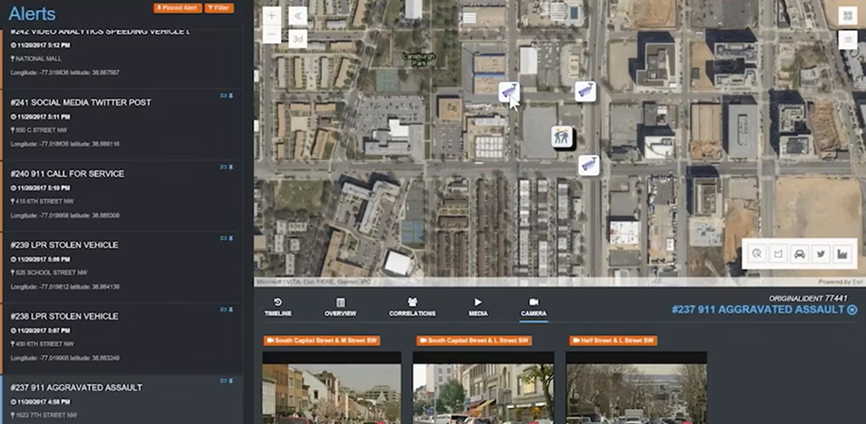
Image: Microsoft presentation

In the wake of 9/11, Microsoft made major contributions to centralized intelligence centers for law enforcement agencies. Around 2009, it began working on a surveillance platform for the NYPD called the Domain Awareness System, or DAS, which was unveiled to the public in 2012. The system was built with leadership from Microsoft along with NYPD officer